QUALITIES THAT PARENTS NEED TO TEACH THEIR CHILDREN

integrity, define integrity

As parents, we need to instil in our children particular traits that are essential for them to adopt and to learn to master early in life. 

This will assist them as they grow and continue to develop into responsible adults and become self-reliant, responsible and well-adjusted people.  These traits need to be inculcated from a very early age.

7 ESSENTIAL QUALITIES THAT PARENTS NEED TO TEACH THEIR CHILDREN

The main traits are..

  1. Resilience – the ability to bounce back after setbacks.
  2. Assertiveness – to take on challenges and resist intimidation
  3. Honesty and integrity – essential in all situations
  4. Confidence – for maintaining happiness
  5. Self-esteem – to build character
  6. Creativeness – to develop their own talents, gifts, ideas and abilities
  7. General social behaviours – good manners, eating etiquette, talking etc

1 Resilience

Teaching resilience is essential when raising children so that they can bounce back from situations where they may otherwise feel challenged or overwhelmed.  

Good strong parental guidance leads by example, showing and explaining how to cope when faced with difficult or challenging situations, dealing with friendships, or falling short of their expectations about school exams, sporting results and the many other challenges that children face.  

The young child, as well as the teenager, needs to be guided and encouraged through difficult times

Children need to learn that by solving problems and keeping everything in perspective, challenges can be overcome.  Problems can be faced head-on and solutions can be found.  

The young child, as well as the teenager, needs to be guided and encouraged through difficult times, in order to learn that, by analysing a situation and solving problems, with resilience, difficulties can be overcome and that there is always a way.

2 Assertiveness

When children become more confident, assertiveness will follow.  Assertiveness is a by-product of confidence. As children grow and develop and experience new challenges or different situations in life, they are less likely to shy away from new difficulties they face and be more likely to speak up and ask for help.

This helps them to feel more capable and builds assertiveness.  Children need to understand that we all make mistakes when learning a new sport or playing a musical instrument. The most important thing is having a go… participating and understanding that learning new skills can take time.  

Learning New Skills can take time

Parents need to encourage, not step in and take over, or over-react.  Children are watching and learning from adults all the time and sensitive children will not want to participate if they sense a negative response.

Affirmative words and actions and reactions from their parents will reinforce positive assertiveness building skills.

Parents need to be very careful using comparisons between themselves and/or other siblings as this will create feelings of insecurity and low self-esteem. They may lead to a fear of rejection and put doubt in their minds, making them feel not capable or that others rights are more important than theirs.

It’s important to build assertiveness in children so their confidence and self-esteem levels will grow and develop. This helps them feel valued, loved and heard. Children being assertive encourages good positive communication between parents and children. Kids will feel free to speak up when they feel something is wrong, or they may feel uneasy about something.  They will feel that they have a right to express an opinion when appropriate, knowing they will be listened to.

3 Honesty and Integrity.

Honesty and integrity are integral to a child’s early development and should be learnt from a very early age.  When children are playing games or sharing with others, this is when parents can explain clearly about not cheating and being fair with each other, playing by the rules, not the ones made-up on the spot to suit. This develops integrity and demonstrates the importance of sharing.

Fairness and honesty can be taught while playing board games

Children will in turn expect their siblings, other children, and adults also to behave with the same integrity and honesty.  Integrity and honesty goes to the heart of proper family values, how parents behave and expect their children to behave, and that everyone can be trusted.

If parents (and children) demonstrate honesty in daily life, and if it is reinforced and rewarded, this helps children to transition into the teenage years, knowing that honesty and integrity is a normal part of their everyday life. This will go a long way in helping them to become well-rounded adults.

4 Confidence

Develop Confidence and Self-Esteem in your child.

Parents will not always be around to assist a child when difficulties arise, but if you know how to build confidence in your children, you will be gently using encouraging words and affirmations.  Kids’ confidence will thus grow in small steps as adversities arise.

Growing confidence is inevitable and children will be able to stand on their own two feet and be proud of their achievements. These are very important lessons to learn in life, as facing up to challenges builds self-esteem and confidence.

5. Self esteem

Building self-esteem in children is vital and is closely linked to their behaviour and to their overall happiness in life.  Children need confidence for their everyday wellbeing, and resilience.  Self-esteem building activities for kids are a great way of knowing how to teach self confidence in children.

Children need confidence for their everyday wellbeing

The ability to bounce back and face challenges enables children to feel accepted and fit in with others.  When children are able to be confident, their self-esteem is heightened. Children need lots of praise, when it is due, and strict discipline when their behaviour is unacceptable.  The issue should be dealt with promptly, quietly and fairly. 

Confidence comes when they are encouraged and praised appropriately without excess. Parents need to teach children how to behave correctly when difficulties arise and not crush a child’s feelings when things go wrong.  

Confidence and self-esteem come from within, when a child feels they have mastered something themselves, perhaps a difficult or new challenge that may take some time to overcome. 

Your children’s confidence and self-esteem levels will grow with every new difficulty.

6 Creativity

All children are born with creative ability and when given the opportunities to develop their creative talents, they learn to explore new possibilities. Their brain forms new pathways, heightening their cognitive ability to try new things and overcome new challenges.  Creativity develops imagination and this can be expressed through creative writing, music, dance, theatre, plays and the arts.

Visiting museums and exploring art galleries, appreciating and discussing with others as to what they see and how they feel, is essential to opening up a child’s mind to explore different avenues that they may develop an interest in.

Whilst many screen-based activities can be creative, parents need to allow their children to experience a variety of sporting activities to develop and strengthen hand-eye coordination, ball-handling skills, along with balance and muscle strength. This in turn leads to close friendships through collaboration between team members, developing strategies and helps them to consolidate their opinions, strengths, and values.

Playing games involves developing creative strategies

Children are happier when they are engaged in creative activities that bring them pleasure.

This develops new thought processes and cognitive thinking ability, expanding their knowledge as they engage in new creative skills.

7 Good Manners and Social Behaviours.

Good manners are one of the fundamental behaviours that parents need to teach their children, to fit into society.  Without proper basic manners, children will struggle and find that others will not approve of their behaviour.

Table etiquette, politeness, queuing in line, eating your food, playing with others and knowing how to behave when playing on the children’s playground equipment, or eating out at a restaurant and many more, all require parental guidance, practice and the setting of good examples. When raising children, these common essential behaviours need consistent encouragement and reminders to reinforce and to eventually become a natural characteristic of every child.

Read more about Raising Happy Children

Developing balance and muscle strength

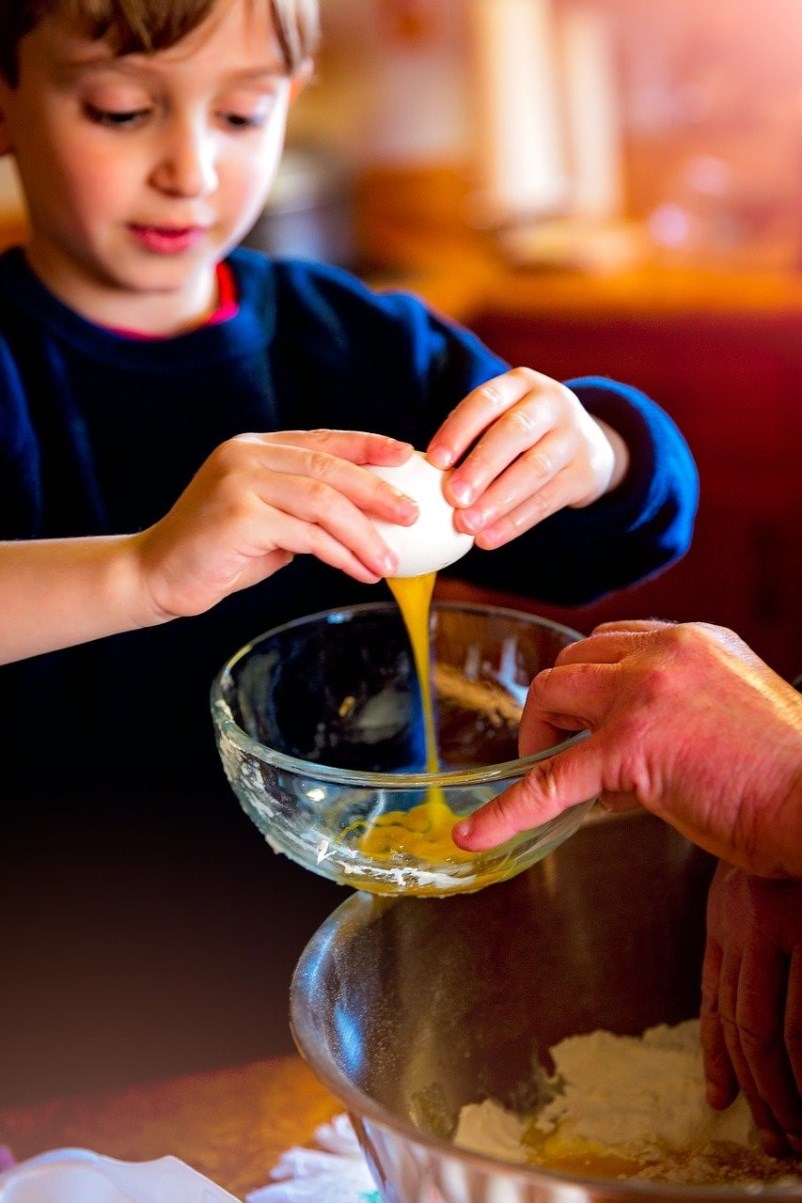
Teaching Your Children Cooking

children cooking

Kids love to cook, and teaching them to cook from an early age introduces them to a variety of different foods so they develop a greater appreciation of taste, feel, size, and smell when preparing fresh food and when enjoying the results of their efforts.  Kids are more likely to eat what they have cooked themselves and are more willing to try a wider variety of foods.

children cooking

The best way to teach kids how to cook and encourage their love of good food is to let them help in the kitchen from an early age.  Children will have a better understanding of food and how it’s prepared.  You never know, by getting junior cooking early, your child may become a kid chef in the family.  Also, allowing kids in the kitchen expands their language skills around words such as simmer, sauté and blend.  If you are teaching a child baking, they will need to learn safety and the very important aspect of hygiene.  

Teaching children cooking empowers them with better knowledge of where their food comes from, which foods come fresh and why some foods need to be stored in a fridge.  Getting children cooking helps them understand which foods come in tins, bottles, in a spice jar and what foods are bought fresh.

A simple meal that’s an easy dinner for kids to cook may become a regular routine, eating food kids can make.  And keeping junior cooking will develop his skills for the long term. One recipe that would characterize easy cooking for kids, as well as being snacks kids can make, would be kids cookie biscuits that could well become a favorite.

KIDS CAN COOK

Some parents don’t allow their kids in the kitchen, however there are several ways to teach your child baking.  It’s even possible to teach baking for toddlers to learn to make simple meals.  If you play at cooking with toddlers, you never know, your child may quickly develop into a kid chef.  Cooking with pre-schoolers can be fun and they are sure to learn some basics as they watch you in the kitchen.

You can allow older kids in the kitchen to participate when you are cooking, while making an easy dinner for kids to eat (or a quick healthy kids dinner).  This shows them how delicious, healthy, quick and easy kids’ meals can be made.

As an educational program, many schools have kitchen gardens, so kids can learn about cooking using the herbs and spices fresh from the school garden.  If the school also has a cooking program, teachers can explain the benefits of certain foods as the children are involved in choosing the plants to use in cooking.

Vegetable Garden

Cooking encourages children to eat healthy meals as well as experiment while being creative.

Cooking Class

SIMPLE TIPS ON TEACHING CHILDREN COOKING

EASY COOKING FOR KIDS

You may wonder what would be an easy dinner for kids to learn to cook or what would be the best cookbook for kids to use to learn how to cook.   It may not even be necessary to use a cookbook for kids to follow, as they may be able to learn to follow simple recipes that you may already know.  Kids love to cook. It’s simply a matter of finding food kids can make.

How are you going to get junior cooking?  Why not start with a simple breakfast kids can make.  Your kids cook real food, even if they are simply boiling an egg.  

Further down the track, you may let your kids cook dinner.  But before that, there are many simple lunches kids can make.  There are even some recipes kids can make on their own.  If you decide to teach your children cooking, they will have a skill for life.

When kids cook real food in the kitchen, they will no doubt like their food better, but will also understand where food comes from and how its prepared.  Getting children cooking may even help them to develop their own recipes kids can make on their own.  Simple things kids can cook are kids’ cookie recipes. (Why not teach your kids cookie baking).

Kids love to cook but first they need guidance and proper safety instructions, before starting.

They will need to…

  • Wash hands properly before preparing the kitchen space ready for cooking.
  • Find the stool for standing on, putting on the all-important apron.
  • Tie their hair back.
  • Find the correct mixing bowl, tray for oven baking, oven safety gloves, spoon for mixing, kids cookie cutter… all before starting.  
  • Start collecting all the basic ingredients for things kids can cook.  
  • Measure the correct cup quantities of flour, butter, eggs, sugar, sultanas and cornflakes.

Children cooking need to have clean hands, a clean bench top for preparing easy food kids can make and always clean up hands and the kitchen when child baking is finished.

With the increased interest (these days) in eating healthy foods, there are more kids in the kitchen cooking than in previous generations.  Kids are coming up with their very own family recipes while taking on more responsibilities in the kitchen. Some of these kids can be encouraged to develop their own children’s cookbooks with many recipes that are easy cooking for kids to tackle, plus an easy dinner for kids to follow and understand.

Many children find that cooking develops more responsibility which in turn DEVELOPS THEIR SELF-ESTEEM.  With more kids in the kitchen, new skills are being learnt, new responsibilities are being taken on, as they are also developing their own creative new skills such as cutting, mixing, weighing and cooking different foods.

All kids love to cook, they just need guidance and proper safety instructions before starting.

SAFETY IS FIRST WITH KIDS IN THE KITCHEN

Safety in the kitchen is paramount when anyone is cooking… especially when using sharp knives, hot water and steam from cooking vegetables, ovens and other equipment. It is always recommended that every kitchen have a Fire Safety Blanket.

So, children cooking always need supervision. Kids need guidelines and rules about which pots, pans and utensils they can use.

PICTURE

7 SIMPLE STEPS FOR KIDS IN THE KITCHEN

Food safety guidelines for children cooking

1 Wash hands thoroughly with soap and water

2 Tie hair back, perhaps wear a cap, apron and gloves

3 Food surface cleanliness, for food preparation

4 Teach knife safety and utensils and which ones to use

5 Separation of raw meat poultry, seafood with fresh food

7 Teach cooking equipment, oven and utensil safety

Tip: Remind children cooking to wait until food is cooked before sampling.

With children cooking, they will soon develop a love of food and better appreciate the effort involved in the preparation of a delicious meal.  And remember, make it fun.  Take lots of pictures and create memories for you and your children to cherish!

So what are things that kids can cook?  Quick and healthy kids’ dinner recipes are a great place to start.

Here are some ideas for Easy Meals Kids Can Make

If you would like to learn from Jamie Oliver cooking with kids, click here…

Read more about Fun Activities for Kids

Image of fun activity

Taking Your Child Out

Children at a playground

5 Tips for Taking Children Out

When taking your young children out, it is important to prepare them ahead of time.

Tip 1: Parents need to be in agreement with each other concerning the behaviour expected and rules that will apply when junior is taken out.

Tip 2: Have a special bag of interesting (different) things when visiting a restaurant or coffee shop.

Tip 3: It’s important to prepare your children for the outing. Give them a “heads up” in advance. For example say “In 10 minutes, we are going to…” or “In 5 minutes, we need to have our shoes and jacket on”.

If going to the park, say… “We are going to the park… remember…

“At the park there will be other children. You will need to take turns”

Or, if going out to dinner…

“We are going out to dinner… just a reminder that …

we sit on our bottoms etc

we use our quiet voice when talking

we remember our manners… say please and thank you”

Tip 4: If you start early, preparing your children for the outing, they will remember the rules. And always remember, to avoid upsets, consistency is key. Rules that apply at home apply out as well.

Child eating

At meal times, encourage your children to sit on chairs properly, keep mouth closed when chewing, talk quietly. Consistently applying such behaviour expectations at home will make it so much easier to apply them when taking the child out.  If children are respectful at home, they are much more likely to be respectful when out.

The same procedure can also apply to visiting friends or family and enjoying a meal together.

Tip 5: When it is time to get ready for an outing give your children warning and allow them adequate time to finish what they are playing at and allow sufficient time for them to get ready.

It’s a great thing to be able to take your children out for dinner and be confident that they will know how to behave. It makes going out much more of a special occasion, and the event will be much more enjoyable for everyone.

So, adequate preparation is key.

Remember, we as adults like pre-warnings and so do children.

Read more Helpful Parenting Tips

Stimulating Activities for Children

Handwork activities for kids

When children have lots of opportunities to participate in a wide variety of stimulating activities, it stimulates and develops their confidence and willingness to try new things.  

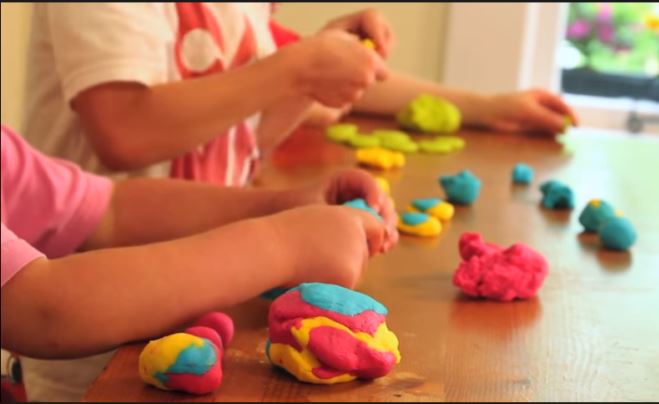
When actively engaged with art and crafts, cooking or textile activities, they are stimulating their senses.  They are experiencing texture, touch, smell, soft, hard, wet or delicate things that stimulate their minds to problem solving, awakening and exploring their creative skills and abilities and desires

Hand-Eye Co-ordination

Playdough Activities

Hand eye coordination develops when they experiment with practising drawing, painting and using scissors and gluing.  Parents need to read stories to their children, which further stimulates their imagination as they listen to the different adventures of the book characters. Even though they cannot read yet, if helps to develop their language skills and how different words express feelings, thoughts and action.

Children are learning more about themselves, developing words and phrases, expressing themselves through feelings and their developing thought processes. They learn language through facial expression, saying new words they hear, trying to put them in a sentence and mimicking others around them.

Because children are watching and listening to those around them, parents and teachers shouldn’t use “baby talk” when expressing themselves, but rather express themselves as normal, explaining why, how etc and using normal adult speech. This helps children understand and develop their use of language, how words are put together and expands their vocabulary.

Parents need to provide a safe learning, stimulating environment where children can experiment, imagine and play happily.  

When parents or teachers facilitate a stimulating environment for young children, the children are given a distinct advantage when it comes to language skills, confidence, self-esteem levels and creative, imaginative development.

Read more about Activities for Children

Parenting Styles

Parenting Styles

Parenting Experts have concluded that there are at least three parenting styles. 

Effective parenting styles can vary according to culture.  

The three main parenting styles are authoritarian parenting, authoritative parenting and the permissive parenting style.  These parenting styles are all very different in their parenting approach.

Authoritative Parenting has been found to be the most effective style of parenting in western culture.  Authoritative parenting is consistent and enforces boundaries.

Authoritative parenting is characterized by the parent giving reasonable demands, setting consistent limits, expressing warmth and affection and listening to the child’s point of view.  American children raised by authoritative parents tend to have high self-esteem and social skills.  Whilst the authoritative parenting style is the style that is most encouraged in modern American society, this is not necessarily the case in other cultures.

Parenting Styles

In contrast, Authoritarian Parenting which is characterized by parents placing high value on conformity and obedience, tightly monitoring their children, and expressing less warmth, is seen as more beneficial in other cultures. For instance, in a 2010 study by Russell et al, first-generation Chinese American children raised by authoritarian parents did just as well in school as their peers who were raised by authoritative parents.

Many parents today adopt a Permissive Parenting style which has few guidelines and rules. Permissive parenting, however, can lead to undisciplined children as they develop.

No new parents would want to regard themselves as bad parents.  And no parent wants to be accused of excessively permissive parenting but, on the other hand, few parents would want to be regarded as “the world’s strictest parents”.

In raising happy children, parents need to be vigilant, active parents but not “helicopter parents”, hovering and rushing to meet their needs at every turn.  Parents of happy children are active parents who foster care, nurture and warmth, whilst at the same time demonstrating and setting examples to their children.  

Positive parenting is a child-centered approach that ultimately leads to Raising Happy Children.