7 TIPS ON HOW TO GET YOUR CHILD TO SLEEP

Baby to sleep

The Bedtime Challenge

Bedtime is a very important part of each day’s routine but getting your child to sleep can be frustrating for both child and parent.  Many parents regularly dread it when it’s time to put their children to bed… the struggle it can be, and it can be very confronting when being challenged by your beautiful, adorable young child who seems to object vociferously as soon as you mention the words “it’s time for bed”, no matter how tired they might be. When a child is overtired, or sleep deprived in any way, it can be very challenging for both parent and child.

The bedroom should be a positive, happy place where children love to be, a room that’s welcoming, restful and somewhere to sleep peacefully but bedtime can be a very frustrating time for many parents, as both parents and children can all be tired.  However, there are solutions to this commonly asked question… “How do I get a baby to sleep”?

To solve this common parental dilemma, we need to take a closer look at a few different aspects regarding what should happen prior to bedtime.  One of the main aspects of preparing a child for bed is your language and your tone of voice.    

Seven tips for preparing your child for bed…

Getting your child to sleep

TIP 1 The Room

A child’s bedroom should be an environment that is a warm, positive, safe place.  It needs to be inviting… where children can enjoy playing, reading or just relaxing and where they can fall asleep happily each day.

It should never be used in a negative way as a place for them to be sent to because they were rude, naughty or being punished for something.  If a child misbehaves, their bedroom is definitely not a place to be sent to.  

Tip. 2 Your Tone of Voice

A parent’s language and tone of voice around every phrase should always send positive messages, especially before the bedtime routine.

If a child is sent to their bedroom by their parent using words such as “Go to bed now” or “There are no stories tonight” or “You’re going straight to bed”, in a negative, angry tone of voice, these phrases send strong negative messages to a child around the process of going to bed, their bedroom and themselves.

Negative phrases send conflicting messages and only make a child feel confused and unhappy, especially at the end of their day when it should be a happy time of closeness and good feelings about themselves.  It can cause a lot of harm to a child’s overall self-esteem and a child’s health and wellbeing.

TIP 3. Allow Time

Don’t over-schedule your day, as children can become over-tired.  Super-busy, stressful days, packed with after-school activities can create havoc with babies, and young children. When parents are over-tired and stressed, this can lead to rushed bedtime routines and cause a child’s regular sleep pattern to be out of kilter.

TIP. 4 Have a Routine

Children love routine.  Establish a regular wind-down routine.  Children start to wind down in late afternoons as usually the day has been full of play time.  Their bodies are slowing and they can get irritable quickly.  They may not process information as easily, and life gets out of balance.

Slow-down routines such as enjoying reading books, watching limited screen time, or helping in the kitchen, help establish a child’s wind-down time as an enjoyable time of the day… for both child and parent.

TIP 5 Plan Ahead

Organise the evening meal to be eaten early, say around 5pm.  This takes forward planning. Children love to assist, helping in the preparations, if old enough.  Children are much more likely to eat food that they have helped prepare.  The evening meal should be a time when, as a family, you talk about what’s happened over the school day etc and it’s a great time to reflect on and discuss any issues that your children may be concerned about.  Children will open up on what’s bothering them if they feel valued and listened too.

Tip. 6 Have a Check List

Establish a BEDTIME ROUTINE CHART for after the evening meal… Children love routines, they look forward to it and it helps make them feel secure.

Give adequate warning time that the impending bedtime routine is approaching.  The wind-down time is needed to precede the bedtime routine so that children will cooperate and have enough time to put their activities away.  This might be 5-10 mins.  Wind-down time allows children to wind down from the activities of the day, as it’s important for them to transition the brain into their sleep-time mode.  It helps prepare the mind and body for sleep.

Headings for the Bedtime Chart…

Bath, Pyjamas, Teeth, Story Book Time, Potty or Night Diaper, Lights out or a soft night light, Singing songs, Hugs and Kisses

Tip. 7 The Surroundings

The room should be quiet and one that promotes relaxation.  The sleeping environment needs to be completely dark to promote deep sleep for a child to feel rested.  Darkened or block-out shades or blinds enable good sleep.  The ideal sleeping room temperature should be around 18 – 21 degrees Celsius or 65 – 68 degrees Fahrenheit for optimal sleep for a baby, toddler or child.  Soft music can aid sleep, but for 5 – 10 mins only.  Children need to drift off to sleep by themselves, preferably without the aid of soft music or white noise. Children need to be able to sleep hearing the general running household noises.  Otherwise it can create a very light sleeper, lead to insomnia or difficulties in the future in not being able to get a deep sleep or have a proper sleep cycle.

It’s important that parents, during bedtime winddown times, use quiet, more soft tones of voice.  This allows little ones’ minds and bodies to settle quietly, giving them a feeling of being loved and cared for.

Read the personal story of one parent’s experience in successfully establishing a bedtime routine

Taking Your Child Out

Children at a playground

5 Tips for Taking Children Out

When taking your young children out, it is important to prepare them ahead of time.

Tip 1: Parents need to be in agreement with each other concerning the behaviour expected and rules that will apply when junior is taken out.

Tip 2: Have a special bag of interesting (different) things when visiting a restaurant or coffee shop.

Tip 3: It’s important to prepare your children for the outing. Give them a “heads up” in advance. For example say “In 10 minutes, we are going to…” or “In 5 minutes, we need to have our shoes and jacket on”.

If going to the park, say… “We are going to the park… remember…

“At the park there will be other children. You will need to take turns”

Or, if going out to dinner…

“We are going out to dinner… just a reminder that …

we sit on our bottoms etc

we use our quiet voice when talking

we remember our manners… say please and thank you”

Tip 4: If you start early, preparing your children for the outing, they will remember the rules. And always remember, to avoid upsets, consistency is key. Rules that apply at home apply out as well.

Child eating

At meal times, encourage your children to sit on chairs properly, keep mouth closed when chewing, talk quietly. Consistently applying such behaviour expectations at home will make it so much easier to apply them when taking the child out.  If children are respectful at home, they are much more likely to be respectful when out.

The same procedure can also apply to visiting friends or family and enjoying a meal together.

Tip 5: When it is time to get ready for an outing give your children warning and allow them adequate time to finish what they are playing at and allow sufficient time for them to get ready.

It’s a great thing to be able to take your children out for dinner and be confident that they will know how to behave. It makes going out much more of a special occasion, and the event will be much more enjoyable for everyone.

So, adequate preparation is key.

Remember, we as adults like pre-warnings and so do children.

Read more Helpful Parenting Tips

Teaching your Child to Read

Reading to your child

Sometimes the best thing you can do for your child’s early literacy development is simply to let them play. Turn off the TV and anything battery operated then let your child pick up their toys, build blocks or duplos, or manipulate puzzles or game pieces. Not only are you giving your child the gift of childhood, something we so often fail to do in today’s hectic, achievement-oriented world, but you are actually helping them build skills that are key to learning to read and write.

Hand-eye coordination is a necessary skill for written language and the best way to help your child develop this skill is to let them play with toys and activities that involve looking at, using, and discriminating a number of elements. Puzzles are obviously a great activity for this but so are manipulative toys such as blocks and Lego.

My son just spent over an hour this evening playing dominoes with his father — OK they weren’t so much playing as setting up complex patterns and then knocking them down — but I didn’t tell them they were engaged in a pre-literacy activity. They were just having fun together.

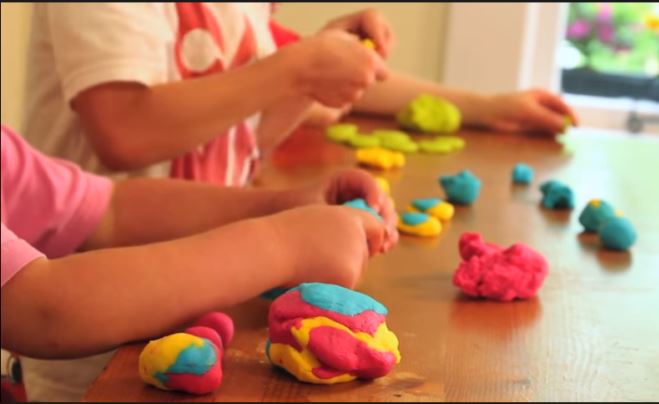
Studies have shown that spending time on hand-eye coordination activities improves children’s ability to learn to read and lessens the difficulty they face during the process. In fact engaging in a variety of craft activities, which most kids love, can be very beneficial so add play dough, stickers, and glue sticks to your list of educational supplies.

Research shows that early practice of hand-eye coordination activities reduces the risk for reading difficulties.

Activities to Encourage

Reading activities

Puzzles help develop hand-eye coordination because learning to control hands and fingers according to information received from sight is a coordination skill that aids children in early attempts at reading and writing.  Determining which piece goes where, working to fit pieces into place by making adjustments, and seeing a sequence develop in an organized pattern can be a great learning experience as well as very satisfying for children.

Puzzles, matching games, and the like are also important to help children learn visual discrimination. Visual discrimination is the ability of the brain to quickly tell the difference among visually similar letters, like “p,” “b,” and “q” or between words such as “was” and “saw.” Students with difficulty making these distinctions often struggle with learning to read, write, and spell. Playing games, engaging in activities, or with toys that help children discriminate among similar objects can be fun for the child and help them master an important preliteracy skill. My son loves to help his father sort change before rolling it to be deposited at the bank. Sure, we could use an electronic sorter but our son loves to engage in the activity and it is a valuable learning experience for him.

Visual discrimination can often be learned with your child’s existing toys. Matchbox cars, dolls, and action figures all offer the opportunity for your child to learn visual discrimination.

Encourage children to work their wrist and finger muscles as well as work on their coordination and small-motor skills to help prepare them for the handwriting practice in their future. Activities to help with these goals include legos and other building sets, playdough, puzzles, pegboards, beads and other table toys. These fun, natural activities help children improve their cognitive and fine motor skills without frustration or boredom.

My son engages in many activities every day that encourage hand-eye coordination and visual discrimination. I don’t suggest the activities to him.  I make the toys and manipulatives available to him and he chooses them on his own. The activities vary he may go an entire week building and rebuilding his wooden train set every day and then the next week his Magnetix set dominates his play time.  Some days he plays with both together and pulls in his Duplos and wooden blocks for added fun.  It doesn’t matter to me which activity he chooses because I know he is having fun, challenging his imagination and learning.

Discover more ideas for hand-eye activities for children

Stimulating Activities for Children

Handwork activities for kids

When children have lots of opportunities to participate in a wide variety of stimulating activities, it stimulates and develops their confidence and willingness to try new things.  

When actively engaged with art and crafts, cooking or textile activities, they are stimulating their senses.  They are experiencing texture, touch, smell, soft, hard, wet or delicate things that stimulate their minds to problem solving, awakening and exploring their creative skills and abilities and desires

Hand-Eye Co-ordination

Playdough Activities

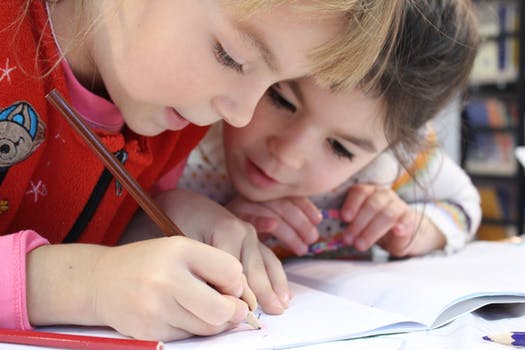
Hand eye coordination develops when they experiment with practising drawing, painting and using scissors and gluing.  Parents need to read stories to their children, which further stimulates their imagination as they listen to the different adventures of the book characters. Even though they cannot read yet, if helps to develop their language skills and how different words express feelings, thoughts and action.

Children are learning more about themselves, developing words and phrases, expressing themselves through feelings and their developing thought processes. They learn language through facial expression, saying new words they hear, trying to put them in a sentence and mimicking others around them.

Because children are watching and listening to those around them, parents and teachers shouldn’t use “baby talk” when expressing themselves, but rather express themselves as normal, explaining why, how etc and using normal adult speech. This helps children understand and develop their use of language, how words are put together and expands their vocabulary.

Parents need to provide a safe learning, stimulating environment where children can experiment, imagine and play happily.  

When parents or teachers facilitate a stimulating environment for young children, the children are given a distinct advantage when it comes to language skills, confidence, self-esteem levels and creative, imaginative development.

Read more about Activities for Children

Encouraging Children to Exercise and be Active.

Children at a playground

It’s important for parents to allow their children to explore new physical challenges as this strengthens bones and muscles and aids their emotional learning.

Obesity is rising in children, due to the lack of exercise along with poor diet.  Obesity will increase dramatically if children don’t engage in at least the moderate recommended exercise rate of 60 minutes per day. This can only be achieved if parents and teachers have organized fun exercise activities for children to get involved in during school hours and after school and on weekends. You live in an age where it is so much easier to sit on the couch, watch tv, look at your iPads while eating highly processed food, all washed down with the many fad sugary drinks that are so easily available.

Exercise for children

Physical education programs run by educational fitness trainers, along with parents and teachers need to educate and show direction, encouraging more children to get involved with low to medium activities.  Sporting programs need to be part of the school curriculum from an early age, as this gets children more active.

Weekend sporting activities are another way to get children out and about, exercising on a more regular basis. Sporting activities help children learn to participate fairly with others, using teamwork skills, supporting each other and enjoying playing, winning or losing but ultimately exercising and being active.  Playing sport with others of their own age is good for developing new friendships and being more socially engaged.  Playing against other sporting groups helps children to develop new skills, new techniques, tactics and strategies when participating against other sporting groups.

Read more Helpful Parenting Tips