Sometimes the best thing you can do for your child’s early literacy development is simply to let them play. Turn off the TV and anything battery operated then let your child pick up their toys, build blocks or duplos, or manipulate puzzles or game pieces. Not only are you giving your child the gift of childhood, something we so often fail to do in today’s hectic, achievement-oriented world, but you are actually helping them build skills that are key to learning to read and write.
Hand-eye coordination is a necessary skill for written language and the best way to help your child develop this skill is to let them play with toys and activities that involve looking at, using, and discriminating a number of elements. Puzzles are obviously a great activity for this but so are manipulative toys such as blocks and Lego.
My son just spent over an hour this evening playing dominoes with his father — OK they weren’t so much playing as setting up complex patterns and then knocking them down — but I didn’t tell them they were engaged in a pre-literacy activity. They were just having fun together.
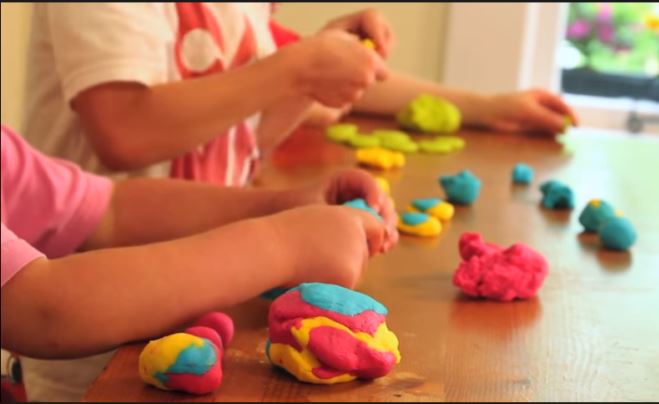
Studies have shown that spending time on hand-eye coordination activities improves children’s ability to learn to read and lessens the difficulty they face during the process. In fact engaging in a variety of craft activities, which most kids love, can be very beneficial so add play dough, stickers, and glue sticks to your list of educational supplies.
Research shows that early practice of hand-eye coordination activities reduces the risk for reading difficulties.
Activities to Encourage
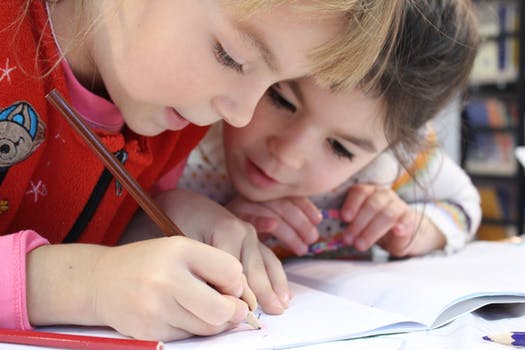
Puzzles help develop hand-eye coordination because learning to control hands and fingers according to information received from sight is a coordination skill that aids children in early attempts at reading and writing. Determining which piece goes where, working to fit pieces into place by making adjustments, and seeing a sequence develop in an organized pattern can be a great learning experience as well as very satisfying for children.
Puzzles, matching games, and the like are also important to help children learn visual discrimination. Visual discrimination is the ability of the brain to quickly tell the difference among visually similar letters, like “p,” “b,” and “q” or between words such as “was” and “saw.” Students with difficulty making these distinctions often struggle with learning to read, write, and spell. Playing games, engaging in activities, or with toys that help children discriminate among similar objects can be fun for the child and help them master an important preliteracy skill. My son loves to help his father sort change before rolling it to be deposited at the bank. Sure, we could use an electronic sorter but our son loves to engage in the activity and it is a valuable learning experience for him.
Visual discrimination can often be learned with your child’s existing toys. Matchbox cars, dolls, and action figures all offer the opportunity for your child to learn visual discrimination.
Encourage children to work their wrist and finger muscles as well as work on their coordination and small-motor skills to help prepare them for the handwriting practice in their future. Activities to help with these goals include legos and other building sets, playdough, puzzles, pegboards, beads and other table toys. These fun, natural activities help children improve their cognitive and fine motor skills without frustration or boredom.
My son engages in many activities every day that encourage hand-eye coordination and visual discrimination. I don’t suggest the activities to him. I make the toys and manipulatives available to him and he chooses them on his own. The activities vary he may go an entire week building and rebuilding his wooden train set every day and then the next week his Magnetix set dominates his play time. Some days he plays with both together and pulls in his Duplos and wooden blocks for added fun. It doesn’t matter to me which activity he chooses because I know he is having fun, challenging his imagination and learning.